
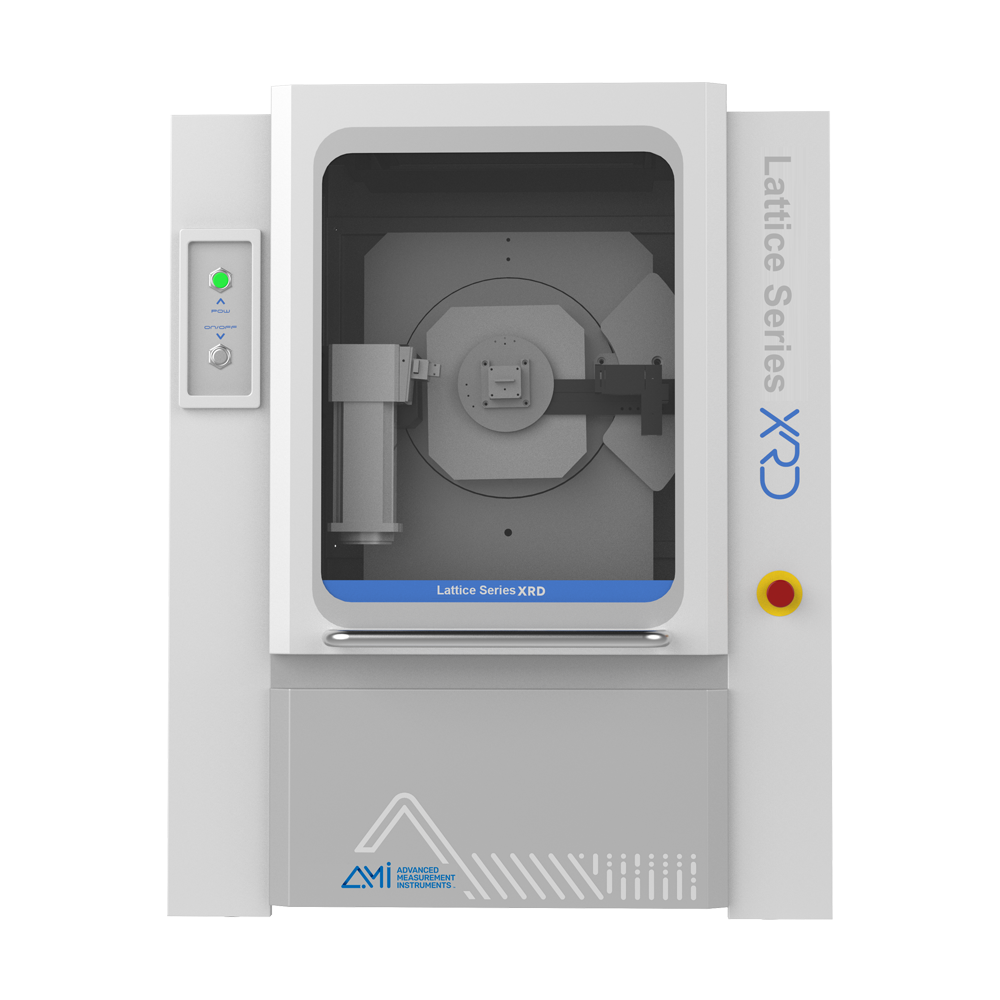

Description
The Lattice Series is a bench-top X-ray diffraction (XRD) system that combines high-power performance with a compact footprint. Equipped with either a 600 W (for the “Mini” model) or a 1600 W (for higher models) X-ray source and a high-efficiency direct-read 2D photon detector array, the system delivers laboratory-grade diffraction data with exceptional signal strength and speed.
Available in three configurations—Lattice Mini, Lattice Basic, and Lattice Pro—the series accommodates everything from routine phase identification to advanced in-situ studies and thin film/coating analytics.
Key Features
-
High-power X-ray source (choose 600 W or 1600 W) for rapid data acquisition.
-
Direct-read 2D photon detector (e.g., 256 × 256 pixel array) that achieves excellent signal-to-noise ratio and sharp peak resolution.
-
Flexible goniometer geometry: Theta/2Theta for Mini & Basic, Theta/Theta for Pro—delivering enhanced angular stability and sample mounting for advanced applications.
-
Minimum step size of ±0.01° 2θ, enabling fine angular resolution and highly accurate peak position matching.
-
Compact benchtop design that fits in modern lab spaces without requiring extensive floor area.
-
Expandable functionality (especially for the Pro model): optional accessory modules for residual stress measurement, thin film/coating samples, in-situ battery studies, high-temperature sample stages, and more.
-
User-friendly software interface for streamlined operation, suitable for routine QA/QC labs as well as research labs needing flexible advanced capabilities.
Typical Applications
-
Routine phase identification in ceramics, metals, minerals, pharmaceuticals, and quality control environments.
-
High-throughput materials characterization in research and teaching labs.
-
Advanced R&D applications: thin film/coating analysis, residual stress and texture measurement, battery materials in-situ testing, layered/heterostructure materials.
-
Universities, teaching laboratories, industrial QA/QC labs, materials innovation centers.
Technical Specifications (Representative)
| Model | X-ray Tube Power | Geometry | Min Step Size | Dimensions (L×W×H) | Weight |
|---|---|---|---|---|---|
| Lattice Mini | ~600 W | Theta/2Theta (~158 mm radius) | ±0.01° 2θ | ~650 mm × 500 mm × 400 mm | ~60 kg |
| Lattice Basic | ~1600 W | Theta/2Theta (~170 mm radius) | ±0.01° 2θ | ~900 mm × 680 mm × 500 mm | ~100 kg |
| Lattice Pro | ~1600 W | Theta/Theta (~170 mm radius) | ±0.01° 2θ | [similar footprint with accessory expansion] | — |
Note: Sample stage, target material (e.g., Cu or optional Co), scan range (e.g., –3° to 156°), optional modules vary by configuration.
Why Choose This System?
-
Delivers lab-grade XRD performance in a benchtop footprint—ideal where space is limited.
-
Offers both speed and accuracy, making it suitable for high throughput labs without compromising data quality.
-
Modular and scalable design means the system grows with your needs—from simple QA to advanced in-situ R&D.
-
Strong value-proposition for labs needing reliable, flexible XRD without full-scale floor-standing instrumentation.
Considerations Before Purchase
-
Ensure your lab infrastructure supports the X-ray shielding, safety interlocks, and service requirements of an XRD system.
-
Determine whether your applications demand the advanced geometry and accessory support of the Pro model, or whether the Mini/Basic will suffice.
-
Accessories (e.g., high-temperature stages, residual stress fixtures, battery cell holders) may add cost and complexity—evaluate based on your future research roadmap.
-
Training and maintenance schedules for XRD systems are important—routine calibration (e.g., reference standards) and alignment verification will ensure long-term data accuracy.
0.0 Average Rating Rated (0)