

Description
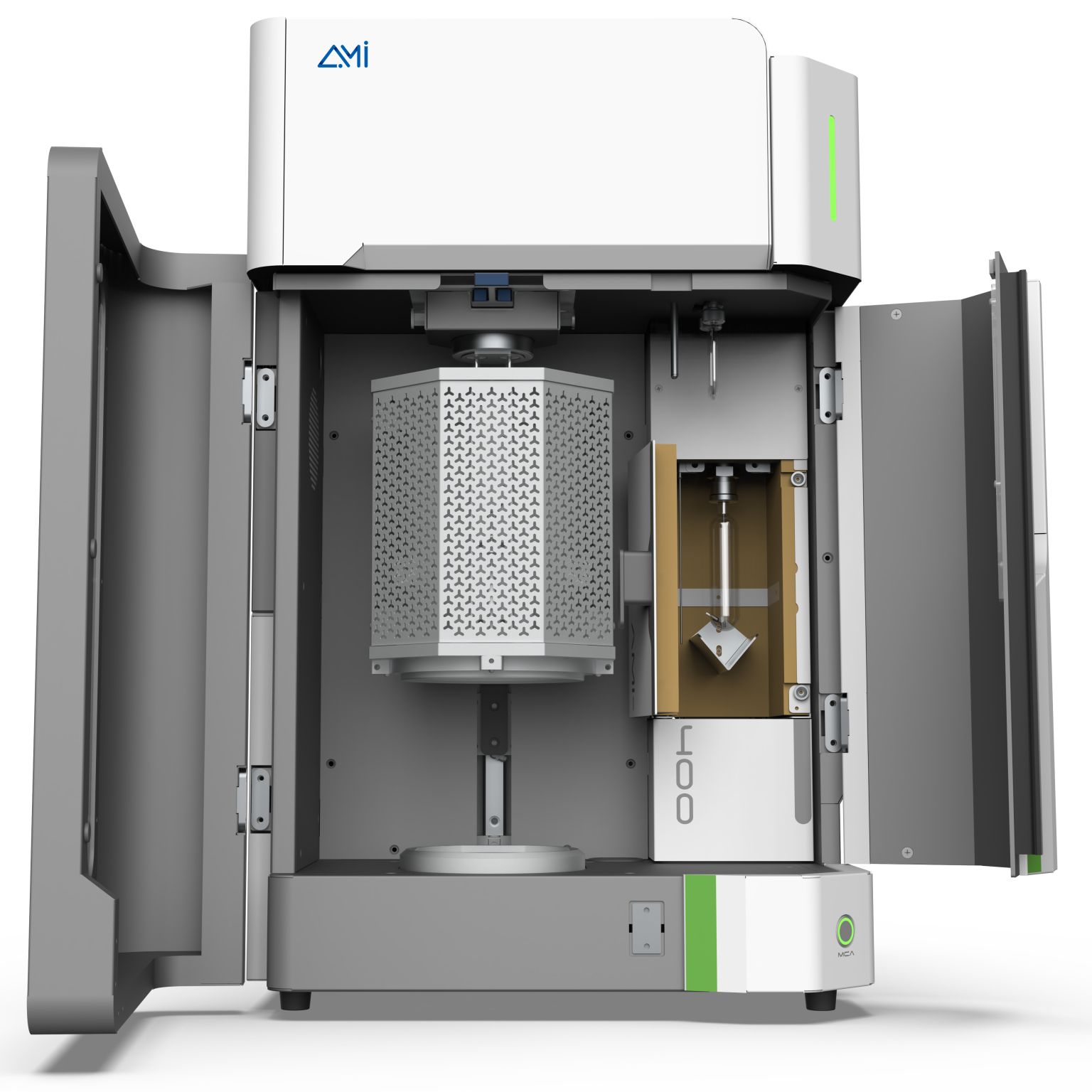
The AMI-400 Series is a fully automated chemisorption analyzer developed for catalyst and reactive surface characterization under both temperature-programmed and isothermal conditions. It is designed to deliver high precision, robust safety features, and streamlined user operation. The system supports experiments such as temperature-programmed desorption (TPD), temperature-programmed reduction/oxidation (TPR/O), temperature-programmed surface reaction (TPSR), pulsed chemisorption, and dynamic BET surface area measurements.
Key Features
-
High-precision Thermal Conductivity Detector (TCD): Equipped with a rhenium-tungsten four-wire filament TCD, capable of integration with optional gas detectors (mass spectrometer, FTIR, GC) for enhanced analytical versatility.
-
Intelligent gas inlet interface: Up to 8 standard inlet ports (with optional expansion) and auto-selection of gas role (carrier, process, pulse) to simplify setup and reduce user error.
-
Heated tubing and valve assembly: The sample path including valves and TCD is housed in a convection-heated oven to eliminate cold spots and ensure uniform thermal environment.
-
Wide temperature control range: Standard from ambient up to ~1200 °C; optional module allows sub-ambient start (down to ~-130 °C) and controlled heating ramp rates from 0.1–50 °C/min.
-
Comprehensive safety and monitoring: Features include an integrated exhaust fan for noxious gases, triple thermocouple furnace control (bed, furnace, over-temperature protection), interlocked safety door and software alarms for fault detection.
-
User-friendly software: Graphical interface allows real-time monitoring of gas flows, valve status, and temperature profiles; data processing tools include peak fitting, integration, differentiation, and kinetic analysis.
Typical Specifications
-
Sample load: 0.1 – 5 g (depending on configuration)
-
Workstation: 1 analysis station
-
Temperature control range: Ambient to ~1200 °C (optional sub-ambient to ~-130 °C)
-
Heating rate: ~0.1 to 50 °C/min
-
Gas inlets: 8 standard ports (expandable)
-
Flow range: ~2–100 mL/min per channel (using MFC)
-
Standard operation pressure: Atmospheric (high-pressure option available separately)
-
Sample tube types: Quartz U-tube or bubble type; piping material 316 stainless steel
-
Dimensions: Approx. 43 cm (W) × 64 cm (H) × 62 cm (D)
Applications
-
Catalyst activation and deactivation studies (TPR, TPO, TPD)
-
Surface site quantification via pulse chemisorption (e.g., metal dispersion, active site count)
-
Dynamic BET surface area measurements in inert or reactive atmospheres
-
Investigation of reaction mechanisms and kinetics via TPSR
-
Materials screening in research labs focusing on energy, environment, and advanced catalysts
Considerations
-
Ensure your lab infrastructure supports high-temperature operation (possibly high vacuum or inert gas environment) and safe handling of reactive gases.
-
Adequate ventilation or exhaust system is required due to potential release of reaction/by-product gases.
-
Operator training is important to set up multi-step temperature programmes, gas switching sequences, and correct interpretation of chemisorption data.
-
Select configuration (e.g., optional mass spectrometer, sub-ambient module) based on your specific experimental requirements to optimise cost-benefit.
0.0 Average Rating Rated (0)