
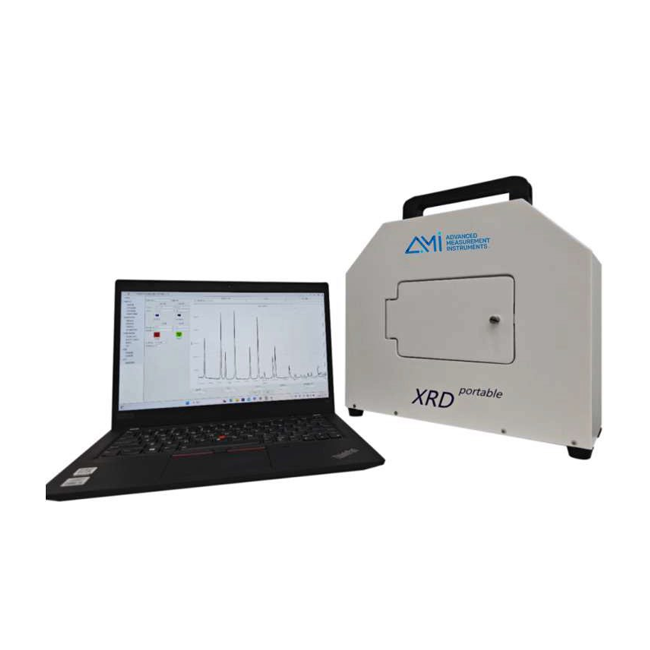

Description
The Lattice GO is a rugged, ultra-compact X-ray diffractometer that brings laboratory-grade diffraction capabilities into a truly portable format. It integrates a specialized X-ray source, Bragg–Brentano geometry, and a high-resolution 2D photon-array detector, delivering high-quality XRD spectra within minutes—even outside the traditional lab environment. Optimized for on-site mineralogical, environmental, or materials analysis, the Lattice GO enables rapid phase identification, quantitative diffraction, and real-time decision making.
Key Features
-
Compact & portable design, suitable for benchtop or field-deployment without extensive infrastructure.
-
High-resolution 2D direct-read detector allowing fast scans with excellent signal-to-noise and angular precision.
-
Bragg–Brentano diffraction geometry (Θ/2Θ) for reliable powder diffraction data.
-
Rapid sample screening: minimal setup, quick measurement enabling real-time material assessment.
-
Lightweight and robust: designed for mobility while maintaining high measurement fidelity.
Typical Specifications
-
X-ray tube: ~30 W, 30 kV / 1 mA (Cu target).
-
Goniometer radius ≈ 110 mm in Θ/2Θ configuration.
-
Detector: photon direct-read 2D array.
-
Maximum scanning range: ~0° to ~130° 2Θ.
-
Minimum step size: ±0.01° 2Θ.
-
Battery runtime (portable mode): up to ~3 hours.
-
Footprint: approx. 120 mm (L) × 300 mm (W) × 300 mm (H); weight ~12 kg.
Applications
-
Geology & Mining: On-site phase identification of ores, core logging, rapid evaluation of mineralization zones.
-
Cultural Heritage & Conservation: Non-destructive analysis of artefacts, pigments, ceramics in museum or field contexts.
-
Education & Portable Labs: Field teaching, mobile research labs, remote site investigations needing XRD without full laboratory setup.
Benefits
-
Transforms XRD from a stationary lab tool to a portable analytical instrument—ideal for field use or space-constrained labs.
-
Rapid results—enables fast decisions in exploration, QC or conservation.
-
“Bring the lab to the sample” approach reduces sample transport time and risk of alteration.
-
High precision and resolution comparable to larger systems, within a compact form factor.
Considerations
-
While portable, the instrument still requires proper radiation safety interlocks, shielding and training.
-
Sample preparation (powdering, mounting) remains critical to obtain high-quality diffraction data.
-
Battery or field-power arrangements need planning for true mobility beyond the bench.
-
For highly demanding research (e.g., in-situ heating/cooling, extreme thin-film analysis) a full-scale benchtop or dedicated system may still be required.
0.0 Average Rating Rated (0)